
One of the strangest things about moving abroad is that nobody knows your story.
Not the impressive parts.
Not the embarrassing parts.
Not the parts that took years to build.
Nobody knows who you were before you arrived.
Back home, we accumulate identities without noticing.
We become someone’s daughter.
Someone’s friend.
Someone’s classmate.
Someone’s colleague.
Someone’s ex-partner.
Someone’s neighbor.
Over time, people begin carrying versions of us in their minds.
Some of those versions are accurate.
Many are not.
Yet we spend years living alongside them.
Sometimes we even start believing them ourselves.
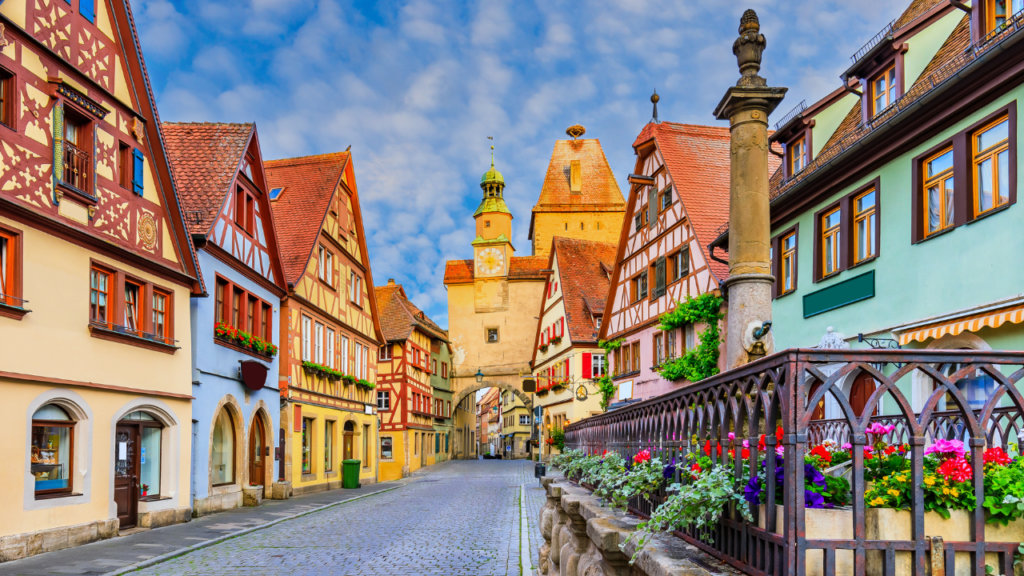
When I moved to Germany, something unusual happened.
Almost all of those versions disappeared.
Suddenly, I was introducing myself from scratch.
Nobody knew what I had studied.
Nobody knew which achievements I was proud of.
Nobody knew which failures still embarrassed me.
Nobody knew how hard I had worked to become the person standing in front of them.
At first, I found this frustrating.
There is a certain comfort in being known.
When people know your history, they understand context.
They understand why certain things matter to you.
They understand who you are.
Or at least they think they do.
Starting over felt like losing something.
Every conversation seemed to begin at zero.
Every relationship required rebuilding.
Every introduction felt incomplete.
How could anyone understand me without knowing the years that came before?
But over time, another feeling emerged.
Relief.
Because if nobody knows your story, nobody can trap you inside it.
People cannot reduce you to your past successes.
They cannot reduce you to your past mistakes either.
They cannot remind you of who you used to be every time you try to become someone new.
For the first time in my life, I experienced what it felt like to exist without a reputation.
And I realized how much energy reputation quietly consumes.
Back home, we often inherit expectations from our own history.
People expect consistency.
If you were ambitious, they expect ambition.
If you were quiet, they expect quietness.
If you made a mistake years ago, some people may still see it long after you have changed.
History becomes a kind of gravity.
It pulls every new version of ourselves back toward the old one.
Living abroad weakens that gravity.
Not completely.
But enough to notice.
The person sitting across from you does not know who you were five years ago.
They only know who you are today.
And that can be terrifying.
Because there is nowhere to hide.
Your identity can no longer rely on old stories.
At the same time, it can be liberating.
Because your identity no longer depends on old stories either.
The experience made me question something I had never questioned before.
How much of who we are is actually us?
And how much is a collection of expectations built by other people?
I do not think moving abroad changes your personality as much as people claim.
What it changes is your audience.
The people around you no longer hold the same assumptions.
The script disappears.
And without the script, you begin noticing which parts of yourself are genuine and which parts were simply habits performed for familiar eyes.
Perhaps that is the hidden gift of being unknown.
Not anonymity.
Not freedom from responsibility.
Something more subtle.
The opportunity to meet yourself without an audience.
To discover which parts of your identity survive when nobody already knows your name.
Moving abroad did not erase my past.
It simply created enough distance for me to see it more clearly.
And for the first time, I understood that being known is comforting.
But being unknown can be transformative.
Leave a Reply