The first time I forgot to buy groceries before Sunday, I thought it was a minor inconvenience.
By noon, I realized it was a mistake.
The supermarket was closed.
The bakery was closed.
The drugstore was closed.
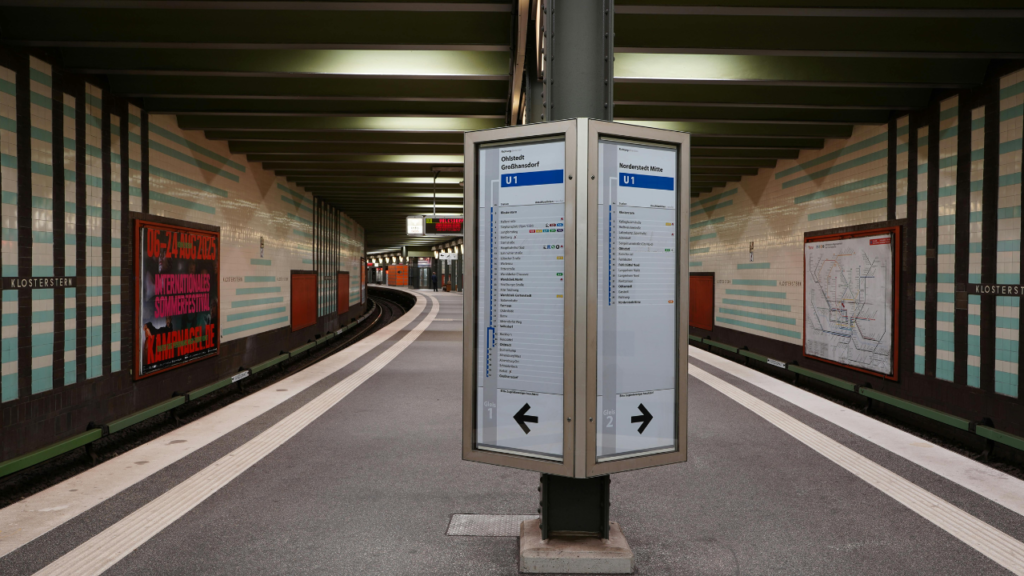
The shopping streets were quiet.
Even the city itself seemed to be moving more slowly.
Coming from Vietnam, this felt almost unbelievable.
Back home, Sunday is often one of the busiest days of the week.
People go shopping.
Meet friends.
Run errands.
Visit cafés.
The city remains fully awake.
Germany felt different.
On Sunday, it was as if somebody had collectively agreed to press pause.
At first, I found it frustrating.
I was used to convenience.
If I needed something, I expected to be able to get it.
If I forgot to buy groceries, I expected a supermarket to be open somewhere.
The idea that an entire country would simply stop selling things for a day seemed impractical.
Surely there was a more efficient way.
Then I started noticing something else.
The silence.
Not complete silence.
Children still played in parks.
People still walked their dogs.
Families still went cycling.
But there was a different atmosphere.
A quieter rhythm.
A feeling that life had temporarily shifted away from productivity.
The longer I lived in Germany, the more I encountered another concept that initially puzzled me.
Ruhezeit.
Quiet hours.
The expectation is that people should avoid creating unnecessary noise.
No drilling.
No loud music.
No vacuuming late at night.
In some apartment buildings, even Sunday afternoons carried an unspoken expectation of calm.
Again, my first reaction was confusion.
Why so many rules?
Why so much emphasis on quiet?
Why should the way I spend my Sunday affect my neighbors?
But eventually I realized I was interpreting these habits through the wrong lens.
I was seeing restrictions.
Many Germans seemed to see protection.
Protection of rest.
Protection of personal space.
Protection of a shared environment where everyone could recover.
That difference fascinated me.
In many societies, progress is measured by the availability of resources.
More opening hours.
Faster delivery.
Twenty-four-hour services.
The ability to get whatever you want whenever you want it.
Germany occasionally seems to ask a different question.
What if constant availability comes at a cost?
What if a society also needs moments when people are allowed to disappear from the marketplace?
What if rest deserves protection too?
I am not saying Germany has found the perfect answer.
There are still Sundays when I realize I forgot something important and immediately regret my lack of planning.
There are still moments when I miss the convenience of a world that never closes.
But over time, I began appreciating something I had never noticed before.
The value of collective rest.
Not personal rest.
Collective rest.
The difference matters.
It is easy to take a day off when everyone else continues working.
It is much harder to create a culture where an entire society accepts that not everything must happen today.
Germany taught me that these are not the same thing.
A free afternoon is personal.
A quiet Sunday is cultural.
And culture shapes behavior in ways we rarely notice.
When the shops are closed, people do something else.
They walk.
They visit family.
They sit in parks.
They read.
They spend time at home.
Not because they are forced to.
But because the alternatives become less dominant.
The absence of commerce creates space for other things.
Perhaps that is why Sunday feels different here.
It is not simply a day when shops close.
It is one of the few moments each week when Germany reminds itself that human beings are more than workers, consumers, and customers.
For twenty-four hours, the country becomes slightly quieter.
Slightly slower.
And maybe that is the point.
The first time I experienced a German Sunday, I thought the country had come to a halt.
Now I think it was trying to remember something that many modern societies are slowly forgetting.
Rest is not what happens after life.
Rest is part of life itself.
Leave a Reply