For a long time, I couldn’t quite explain it.
Germany felt different from the places I had lived before.
Not better.
Not worse.
Just different.
The feeling appeared in small moments.
On trains.
In supermarkets.
In cafés.
On university campuses.
In apartment buildings.
I noticed it when people disagreed.
I noticed it when plans changed.
I noticed it when something went wrong.
The reactions often felt… smaller.
Quieter.
Less dramatic.
At first, I thought I was imagining it.
Then I started paying attention.
Back home, emotions are often social.
Good news spreads quickly.
Bad news spreads quickly, too.
A minor inconvenience can become a group discussion.
A personal problem can become a family project.
A disagreement can attract spectators.
People react together.
They process things together.
Life often feels collective.
Germany sometimes felt different.
People still experienced stress.
They still felt angry.
They still had conflicts.
But many of those emotions seemed to stay contained within the situation itself.
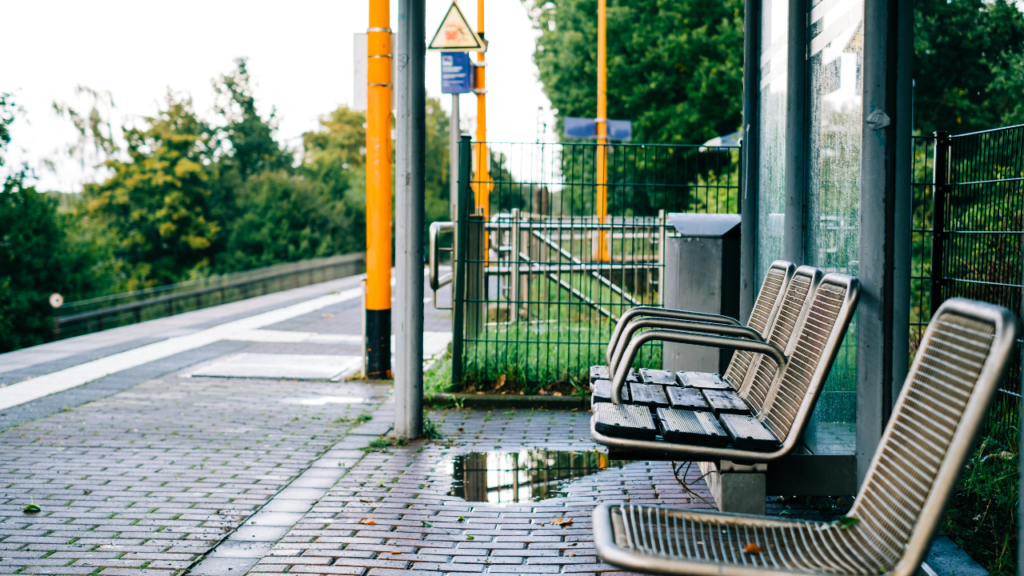
A delayed train was a delayed train.
Not the beginning of a public performance.
A disagreement remained a disagreement.
Not necessarily a story that everyone needed to hear.
Even in everyday conversations, I noticed fewer emotional extremes.
Fewer declarations.
Fewer dramatic conclusions.
Fewer moments where every situation became either a disaster or a miracle.
At first, I interpreted this as emotional distance.
I wondered whether people simply cared less.
But the longer I stayed, the less convinced I became.
The emotions were still there.
They were simply expressed differently.
And that made me question something I had never questioned before.
What if emotional intensity and emotional depth are not the same thing?
Growing up, I often associated visible emotion with sincerity.
If somebody was upset, they showed it.
If somebody was excited, everyone knew.
Strong feelings felt honest.
Yet Germany introduced me to another possibility.
A person can care deeply without making those feelings visible to everyone around them.
A person can be frustrated without turning frustration into an event.
A person can experience emotions without broadcasting them.
The difference became particularly noticeable in public spaces.
In Germany, public life often feels surprisingly calm.
People speak softly on trains.
Queues remain orderly.
Arguments rarely involve entire rooms.
Most people seem to move through shared spaces with an awareness that other people are trying to do the same.
This does not mean Germans are unemotional.
Anyone who has watched a football match here knows that is not true.
Nor does it mean people never overreact.
Of course they do.
They are human.
But there seems to be a stronger expectation that emotions belong primarily to the person experiencing them.
Not automatically to everyone nearby.
Over time, I began to notice how this changed my behavior.
I complained less.
Reacted less quickly.
Allowed situations more time before deciding what they meant.
Not because Germany changed my personality.
But because the environment rewarded a different rhythm.
A delayed train became an inconvenience rather than a catastrophe.
A misunderstanding became something to solve rather than something to dramatize.
A bad day remained a bad day instead of becoming evidence that everything was falling apart.
The change was subtle.
Yet it affected the way I experienced daily life.
There was simply less emotional noise.
And with less noise, other things became easier to hear.
Patience.
Perspective.
Proportion.
Perhaps that is what I am really trying to describe when I say Germany feels less dramatic.
Not the absence of emotion.
The absence of amplification.
The feeling that not every frustration needs an audience.
Not every inconvenience needs a narrative.
Not every moment needs to become bigger than it already is.
There are things I miss about more expressive cultures.
The warmth.
The spontaneity.
The willingness to share emotions openly.
Those qualities have their own beauty.
But living in Germany taught me something valuable, too.
Sometimes life becomes easier when we stop turning every moment into a story.
Sometimes a problem is simply a problem.
A delay is simply a delay.
A disagreement is simply a disagreement.
And sometimes, that is enough.
Germany did not teach me how to feel less.
It taught me how to make less drama out of what I feel.
Leave a Reply