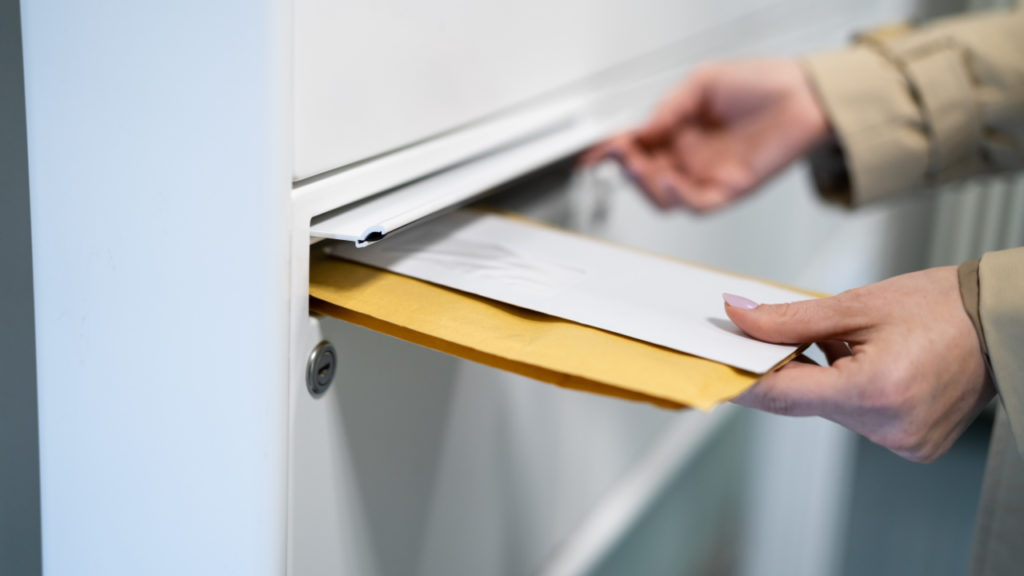
The letter was waiting for me when I got home.
White envelope.
Official logo.
My name is printed neatly on the front.
I had not opened it yet, but I was already nervous.
This is one of the strange skills I acquired in Germany: the ability to feel stressed by an unopened envelope.
Before moving here, I thought letters belonged to another era.
People sent messages.
Companies sent emails.
Governments built websites.
The future, I assumed, would be paperless.
Germany seemed unconvinced.
Over time, I discovered that some of the most important moments of my life in Germany arrived not through an app notification, but through my mailbox.
Health insurance documents.
Residence permits.
Tax information.
Banking details.
University paperwork.
Appointments.
Deadlines.
Decisions.
Every few days, another envelope appeared.
At first, I found this mildly inconvenient.
Then I started wondering why Germany continued to trust paper so much in a digital age.
The answer, I suspect, has less to do with technology than with culture.
A letter feels different from an email.
An email can be ignored.
A letter demands attention.
An email disappears into a crowded inbox.
A letter arrives physically in your life.
You hold it.
Open it.
File it away.
Or forget it at your own risk.
In Germany, paper still carries authority.
And perhaps that reveals something interesting about how the country works.
Germany often prefers reliability over convenience.
Documentation over improvisation.
Proof over assumption.
A conversation can be forgotten.
A letter becomes a record.
This mindset appears everywhere.
Contracts.
Registrations.
Insurance.
Taxes.
The system is built on documentation.
Not memory.
Not good intentions.
Documentation.
For newcomers, this can feel exhausting.
You quickly discover that adulthood in Germany involves folders.
Many folders.
Somewhere between the insurance papers, rental contracts, residence documents, university letters, and bank statements, I realized that Germany was teaching me a skill I had managed to avoid for years.
Organisation.
Not because the organization is exciting.
But because life becomes surprisingly complicated when every important decision leaves a paper trail.
The funny thing is that I now understand why so many people keep folders at home.
A younger version of me would have laughed at the idea.
Today, I know exactly where my residence documents are.
I know where my insurance letters are.
I know where my tax information is.
That knowledge feels strangely satisfying.
Not because I enjoy paperwork.
Nobody enjoys paperwork.
But because those folders represent something larger.
Responsibility.
The ability to keep track of your own life.
The ability to manage things that nobody else will manage for you.
That is why I no longer see the mailbox as a relic of the past.
In Germany, it still functions as a bridge between individuals and institutions.
A place where important things continue to arrive quietly.
No notification sound.
No pop-up window.
No flashing icon.
Just an envelope waiting by the door.
And after living here long enough, I have learned something important.
When Germany writes to you, it is usually worth opening the letter.
Leave a Reply