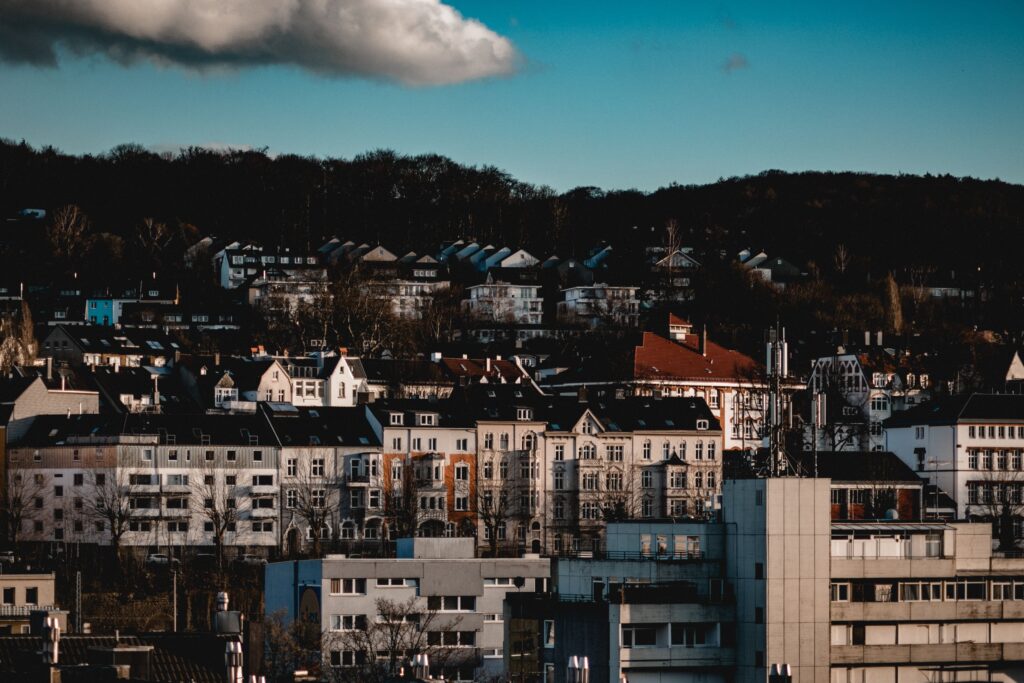
There is something I noticed about German cities.
Not the architecture.
Not the trains.
Not even the quietness.
It is the doors.
The doors that close.
Apartment doors. Garden gates. Office doors. Bedroom doors.
They close with a certain certainty.
Behind each one is a private world that rarely crosses into the street.
When I first arrived in Germany, I found this strange.
In many places, daily life naturally spills outside. People sit near their homes, neighbours talk across balconies, children play in shared spaces, and small interactions happen without being planned.
Here, the boundary feels clearer.
The moment someone enters their home, they disappear.
Not literally, of course.
But socially.
The outside world stops at the door.
At first, I interpreted this as distance.
Maybe people simply did not want to interact.
Maybe the quiet streets meant people were less connected.
But the longer I stayed, the more complicated that idea became.
Because Germany is not a country without community.
It is a country where the community often has a different shape.
It appears in places with clear purposes.
A football club.
A hiking group.
A volunteer organisation.
A local festival.
A Verein.
People gather, but they gather intentionally.
Connection is not always created by accidental encounters.
Sometimes it is something you choose and commit to.
This was a different understanding of social life for me.
I used to think warmth came from openness.
From leaving doors slightly open.
From conversations that started without an invitation.
Germany showed me another possibility:
Maybe respect can also look like distance.
A closed door is not always rejection.
Sometimes it means:
This is your space.
This is my space.
And both deserve protection.
The more I lived here, the more I noticed how seriously privacy is treated.
People do not usually appear at your home without asking.
They do not expect immediate access to your time.
They do not assume they have the right to know everything about you.
At first, this can feel lonely.
Especially when you come from a culture where relationships are often built through constant presence.
Where checking in is a sign of care.
Where a neighbour might become a friend simply because you happen to meet often.
Germany asks for something different.
It asks you to build relationships deliberately.
You do not always stumble into closeness.
You create it.
Maybe this is why German friendships can sometimes take longer to develop.
The door is not opened immediately.
But when it opens, it is often intentional.
There is a strange contradiction here.
A country known for efficiency, systems, and rules can sometimes feel emotionally reserved.
Yet those same boundaries create a certain kind of trust.
You know where you stand.
You know what belongs to you.
You know that silence does not necessarily mean conflict.
A quiet neighbour is not automatically an unfriendly neighbour.
A closed door is not automatically a wall.
Sometimes it is simply a boundary.
And perhaps modern life needs boundaries more than we admit.
In a world where everyone is constantly reachable, where messages arrive at every hour, and where private life is increasingly shared publicly, Germany’s closed doors offer a different idea.
Maybe privacy is not loneliness.
Maybe being left alone can also be a form of freedom.
I still miss the unexpected moments sometimes.
A conversation that begins by accident.
A neighbour who stays for coffee longer than planned.
A little chaos that creates connection.
But I have also learned to appreciate the quiet.
The understanding that nobody is entering your life without permission.
The comfort of knowing that behind every closed door is a person who has a place that belongs only to them.
Maybe the challenge is not choosing between openness and privacy.
Maybe a good society needs both.
Doors that can open.
And doors that are allowed to close.
Leave a Reply